
Business Energy Consultants Analyze Energy-Related CO2 Emissions Dropping in Texas
Carbon dioxide emissions decreased in all 50 states between 2005 and 2023, according to recently released data from the U.S. Energy Information Administration (EIA). With Texas being part of this massive evolution, our business energy consultants get a pretty interesting picture of a state caught between its fossil fuel heritage and the rapidly changing energy landscape of the U.S. Today, our team of experts are analyzing how Texas has reduced its CO2 emissions and what it means within the bigger picture.
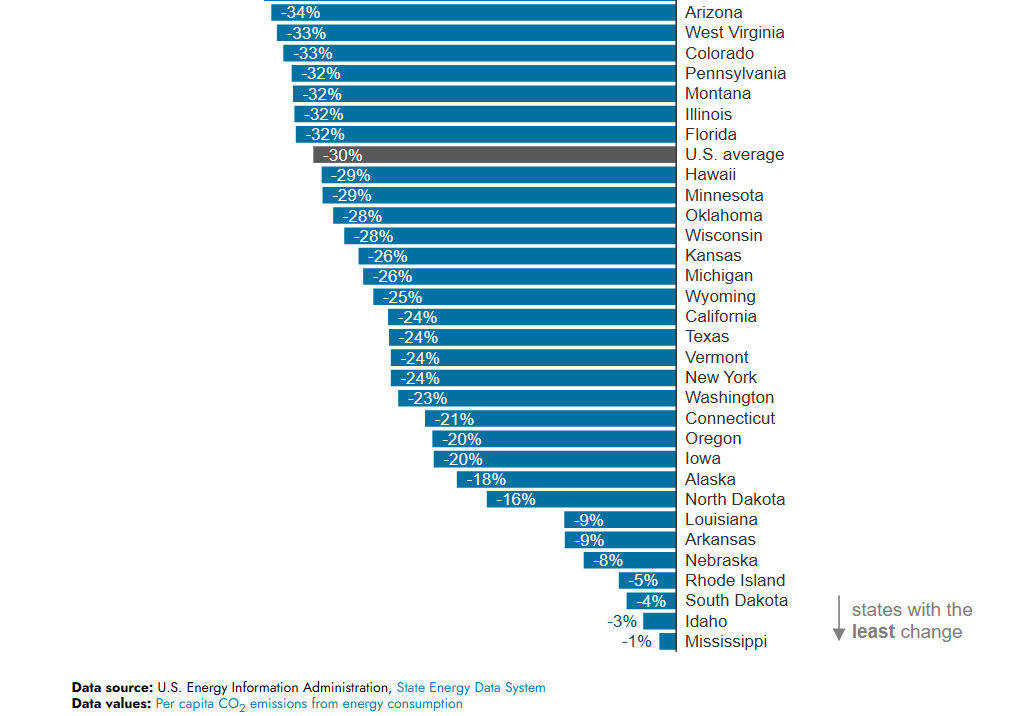
As shown in the graph, every single U.S. state reduced per capita CO2 emissions between 2005 and 2023. In line with the Texas Emissions Reduction Plan (TERP), the Lone Star state saw its emissions reduced as well, despite its reputation as America’s energy capital. Nationally, per capita emissions decreased by 30%, driven by a 20% reduction in total emissions, despite a 14% increase in population.
However, Texas tells a more complex story than states like Maryland, which achieved a 49% reduction in per capita emissions by dramatically shifting from coal to natural gas and renewable sources in electricity generation. While Maryland’s coal shares plummeted from 56% to just 5%, Texas remains one of only four states where industrial activity (not transportation or electricity) generates the largest share of CO2 emissions.
Indeed, the 268,820-square-mile state finds its higher volume of activity along the Gulf Coast, where massive oil refineries, petrochemical plants, and natural gas processing facilities form the backbone of the country’s energy infrastructure. These industrial giants have made Texas a much more complex decarbonization challenge than merely switching power plants from coal to cleaner alternatives.
Related Content: Business Energy Consultants Factoring in Climate Risk in Utilities
Business Energy Consultants Explain Texas’s Energy Paradox: Market Growth vs. Climate Goals
Current market dynamics highlight Texas’s unique position in America’s energy system. U.S. crude oil production hit record highs of 13.4 million barrels per day in the second quarter of 2025, with Texas shale plays contributing significantly to this milestone. Yet, this production boom comes with environmental costs that show up in emissions data.
The EIA forecasts a slight 1% increase in total U.S. CO2 emissions for 2025, partly due to increased fossil fuel consumption for crude oil production. Our business energy consultants are clear about it: the state’s economic success in energy production directly conflicts with broader decarbonization goals.
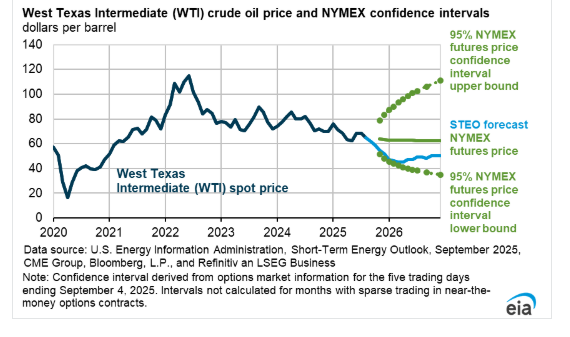
Adding another layer of complexity, declining oil prices are forcing producers to slow drilling activity. The EIA expects U.S. production to decline slightly to under 13.3 million barrels per day by late 2026 as economic pressures mount. At first glance, this slowdown might suggest a temporary relief for emissions growth. Yet in reality, it highlights the vulnerability of Texas’s energy model: a system where economic prosperity hinges on high output, even as market downturns and climate imperatives pull in opposite directions. In this tension, Texas faces a dual challenge: managing the short-term volatility of global oil prices while confronting the long-term necessity of decarbonization.
About Renewable Energy and Texas
While Texas hasn’t achieved the dramatic electricity sector transformation seen in other states, it has quietly become America’s renewable energy leader. The state generates more wind power than any other, and solar capacity is expanding rapidly across the West.
This renewable growth doesn’t get the same attention as oil and gas developments, but it’s reshaping Texas’s electricity mix. Unlike coastal states that eliminated coal primarily by switching to natural gas, Texas is increasingly powered by wind during many hours of the day.
However, Texas’s role as a major electricity exporter means its power sector emissions serve demand far beyond state borders. When Texas burns natural gas to generate electricity for other states, those emissions count against Texas’s totals, a geographic quirk that complicates direct state-to-state comparisons.
Related Content: Why the Texas Energy Scene Demands Specialized Natural Gas Consulting
Onyx Business Energy Consultants in Texas
The evolving Texas energy landscape presents both unprecedented opportunities and complex risks for businesses operating in the state. As traditional energy markets intersect with renewable growth, geopolitical volatility, and regulatory changes, companies need more than just energy procurement; they need strategic energy partnerships that align commercial objectives with comprehensive risk management.
Our business energy consultants go beyond traditional consultancy. In a state where energy prices can swing from geopolitical tensions to renewable intermittency, where industrial emissions face increasing scrutiny, and where supply chains span from West Texas shale fields to Gulf Coast export terminals, businesses require partners who understand both market fundamentals and emerging risks.
Our approach integrates commercial energy procurement with holistic risk management, empowering Texas businesses to thrive amid the complexities of America’s most dynamic energy market while building resilience for whatever comes next.
Disclaimer:
The information provided herein in this content is for general awareness and informational purposes only and does not constitute advice. Our goal is to raise awareness and share knowledge across the energy sector. The content provided here is not intended as a sales offering. For guidance specific to your circumstances, we recommend consulting a qualified professional. You should not place undue reliance on any “forward-looking statements”, which are not a guarantee of future performance. The future results of the energy market are subject to risks and uncertainties that could cause actual results to differ materially from those expressed or implied in any forward-looking statements.
Our Partners






Contact Onyx
Contact us today at (877) 669-7422 for proven energy management services that lower the cost of powering your home or business.